
Botanica Gaia
Botanica Gaia 100% Organic and Pure Kadam Essential Oil | Neolamarckia Cadamba with Fruity Notes
Botanica Gaia 100% Organic and Pure Kadam Essential Oil | Neolamarckia Cadamba with Fruity Notes
A CO₂ flower extract of Neolamarckia cadamba with a sweet tropical floral, honeyed-fruity and woody profile.
Couldn't load pickup availability
Botanical Name: Neolamarckia cadamba.
Family Name: Rubiaceae.
Common Name: Burflower-tree, Kadam, Cadamba, Leichhardt Pine, Laran.
INCI: Neolamarckia cadamba flowers Oil.
Extraction Method: CO2.
Parts Used: Flowers.
Note: Middle note.
Odor: Sweet tropical woody floral, oriental, similar to Champaca and undertone honey.
Appearance: Amber.
Country of Origin: Thailand.
Blends: Balsam of Peru, basil, beeswax, benzoin, bergamot and other citrus oils, black pepper, boronia, cassia, champaca, cinnamon, sage, coriander, geranium, grapefruit, hay, helichrysum, jasmine, lavender, lemon. Lime, Sweetgum (Styrax), Litsea Cubeba, mandarin, lemon balm, mimosa, neroli, orange, orange blossom, orris, sweet olive, petitgrain, rose, rosewood, sandalwood, tonka bean, tuberose, vanilla, violet leaves, ylang ylang yuzu .
Essential oils extracted with CO2 have the properties of essential oils but have different nuances of aroma. They are extracted using carbon dioxide CO2, under pressure. In normal atmospheric conditions, CO2 is a gas, but when it is at high pressures it is compressed, until it has the density of a liquid, and becomes Supercritical Carbon Dioxide, being in an intermediate state between gas and liquid, being neither. of the two. It is in this supercritical phase that CO2 becomes a solvent to extract the essential oils contained in the plants. Once extracted and when the pressure decreases, the CO2 returns to its gas state, dissipating completely, leaving the extracted oil very pure and clean. It is the cleanest technique and achieves the best quality essential oils possible.
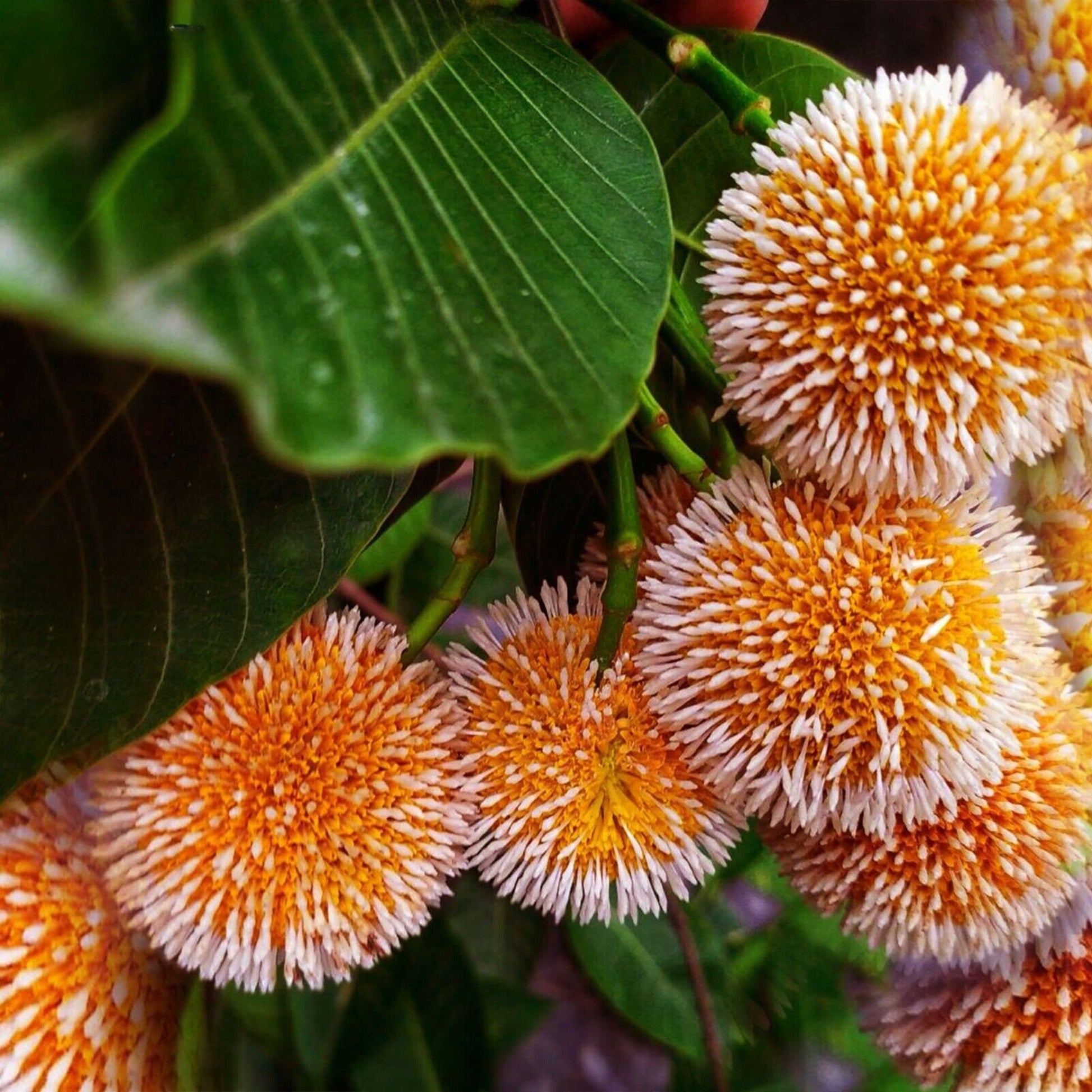
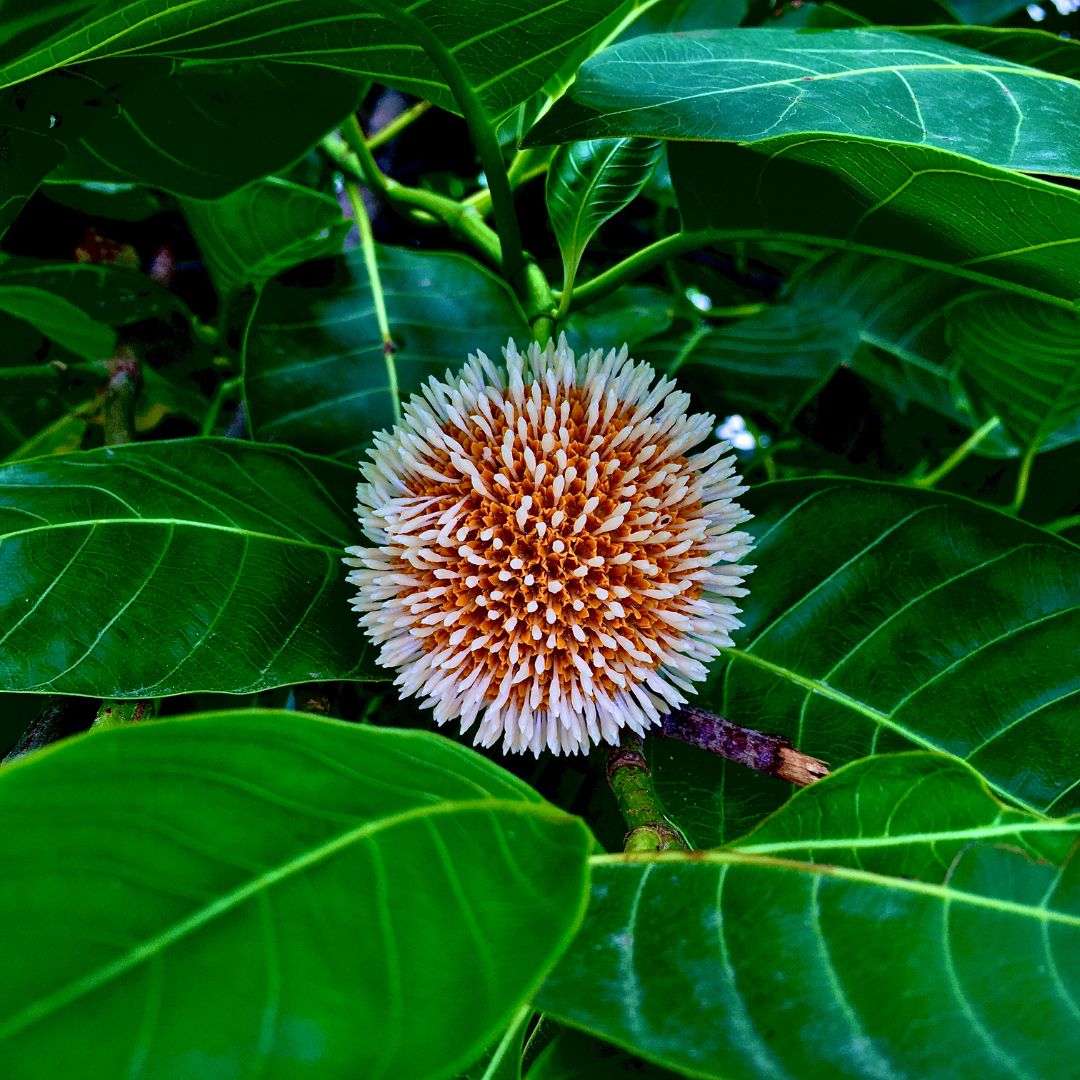
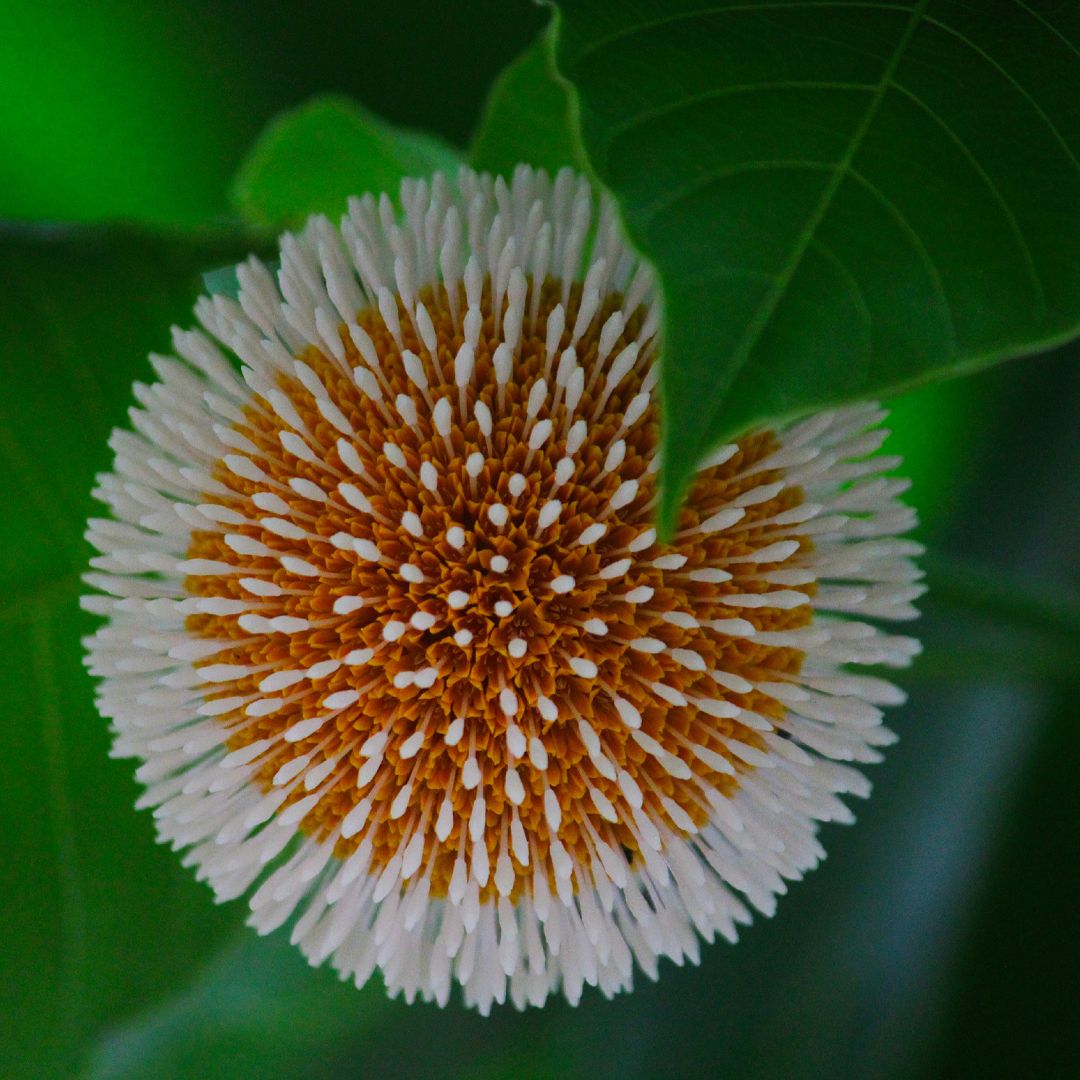
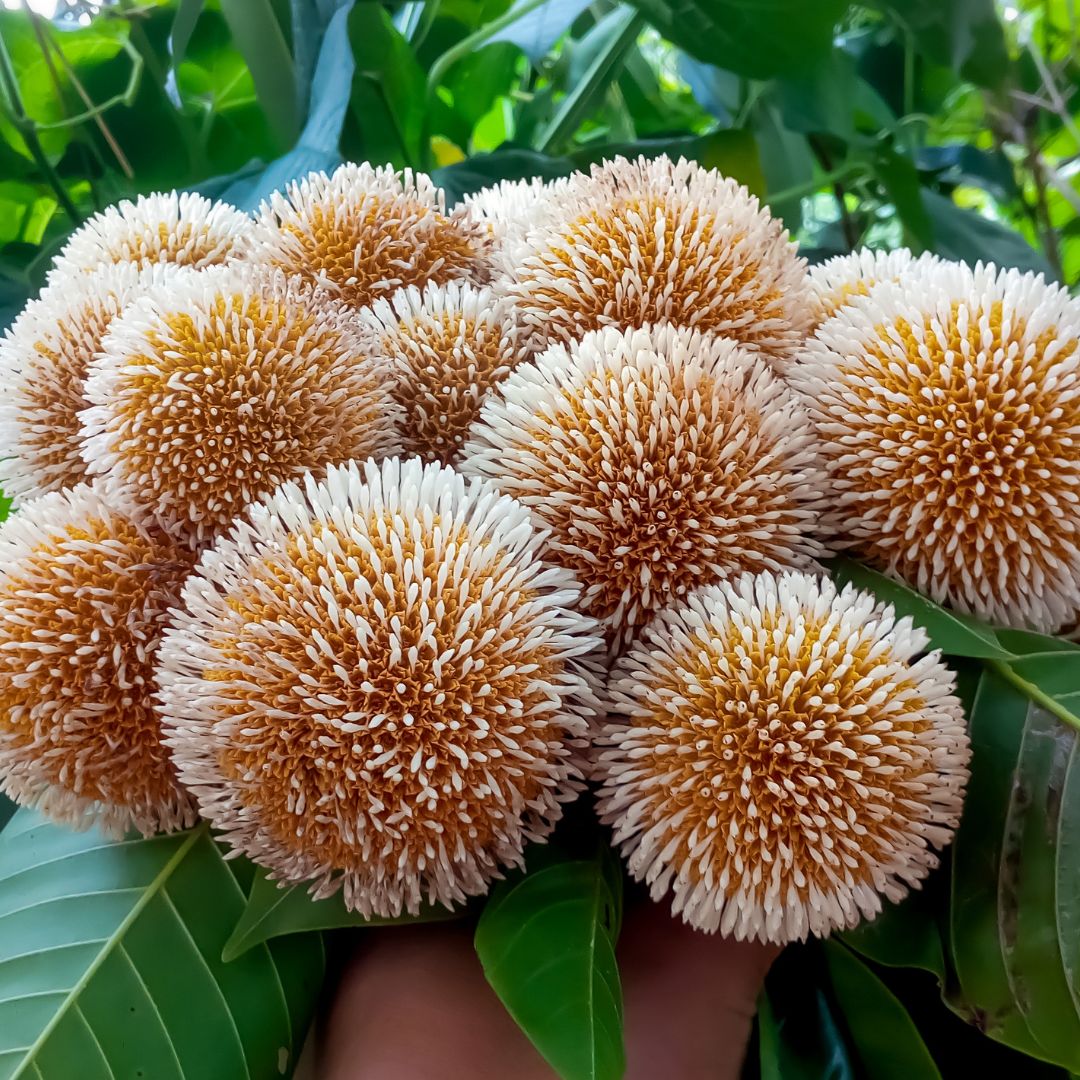
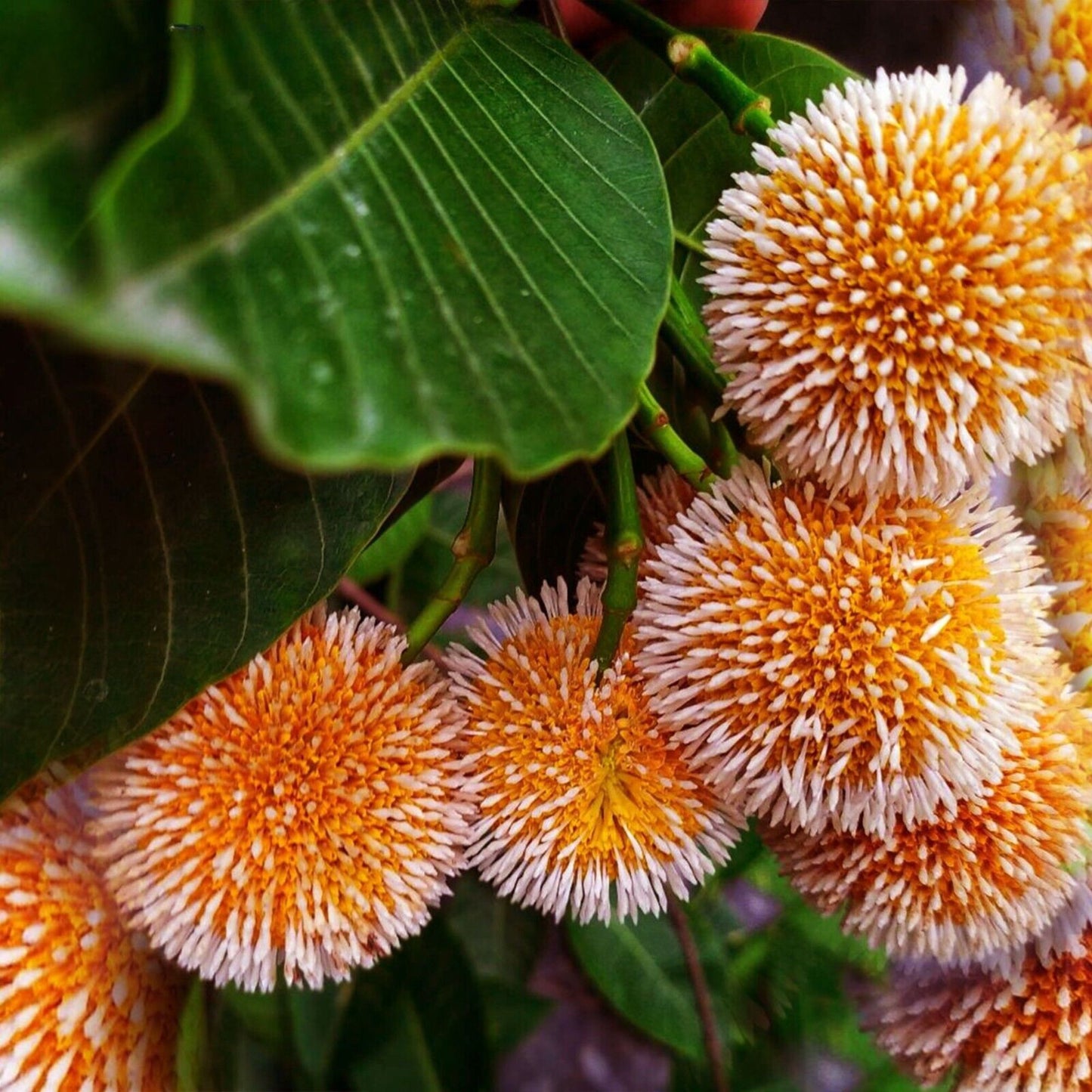
The Kadam flower is widely distributed throughout the tropical and subtropical areas of the world. It is used by Hindu culture for centuries, since it is considered the flower that represents the Goddess Durga, in addition to being the emblem of the ancient Indian principality of Athmallik, in force when the British colony was in India.
The flower sprouts from a tree that has multiple properties and uses. Currently there are numerous studies done on the tree and its different parts and the properties they contain.
The leaves, bark and roots are used to reduce blood sugar levels, as they contain methanol extracts that help level blood sugar. The leaves are used in Ayuverda and Bangladeshi medicine in the form of an alcoholic tincture to control diabetic disorders. In studies carried out in mice (PudMed Study: 22238487), the beneficial effects of reducing blood glucose were demonstrated by administering Kadam leaf extract to mice when they had very high blood glucose levels, and verifying how these levels were reduced significantly.
In studies carried out, it has been discovered that both the leaves and the bark have analgesic and anti-inflammatory properties for pain relief.
Other studies carried out with rats showed that the root has hypolipidemic properties, that is, it helps reduce high levels of fat.
Kadam is also very effective in relieving stomach disorders, such as cramps, controlling diarrhea and vomiting.
From the Kadam flower, a very popular Attar is made in India, used for its exotic and delicate aroma, as well as for its healing properties and in religious rites.
In aromatherapy it is used for its calming properties, to practice meditation and yoga, as it helps the mind to a state of relief and mitigates stressful thoughts.
In perfumery it is used for its exotic, woody-floral and oriental aroma, to give a different touch and make unique compositions.
Not for use during pregnancy, with the elderly, infants, or if epileptic. Possible skin irritant in some individuals; dilute well.
General Safety Information: Do not take any oils internally and do not apply undiluted essential oils, onto the skin without advanced essential oil knowledge or consultation from a qualified aromatherapy practitioner. If you are pregnant, epileptic, have liver damage, have cancer, or have any other medical problem, use oils only under the proper guidance of a qualified aromatherapy practitioner. Use extreme caution when using oils with children.
Specifications of Kadam CO₂ Flower Extract
- Botanical name: Neolamarckia cadamba
- Family: Rubiaceae
- INCI: Confirm exact supplier declaration for the flower CO₂ extract
- Extraction method: Carbon dioxide extraction, according to the source
- Part used: Flowers
- Note: Middle
- Odor: Sweet, tropical, woody and floral, with fruity, champaca-like and honeyed nuances
- Appearance: Amber
- Country of origin: Thailand
- Batch control: Confirm extraction parameters, concentration, non-volatile content and compositional analysis
Aromatic Profile
A warm tropical-floral heart with honeyed sweetness, ripe-fruit softness and a woody oriental base. Its champaca-like character can give body and warmth to exotic floral accords.
Blending Direction
- Pairs with jasmine, champaca, rose, sandalwood, vanilla, resins, citrus and tropical florals.
- Useful in honeyed floral, fruity-floral, ambery and oriental structures.
- Evaluate solubility and color impact because CO₂ extracts may contain less-volatile components.
Formulation & Usage
CO₂ extraction can recover both volatile and less-volatile flower constituents. No batch-specific composition is established by the source, so the current COA, SDS and analytical report are required for formula decisions.
Perfumery
- Begin at low concentration and evaluate warmth, color and persistence.
- Check solubility in the chosen perfume or cosmetic base.
- Do not transfer biological claims from leaf, bark or root studies to this flower extract.
Topical Formulation
- Do not apply undiluted.
- Set the use level from the supplier documentation and current IFRA guidance.
- Assess stability and skin compatibility in the finished product.
Applications
Fine Perfumery
For tropical florals, honeyed bouquets, fruity-floral hearts and warm woody-amber accords.
Personal Care Fragrance
For professionally formulated body, skincare and haircare products after solubility, color and safety assessment.
Product Development
For perfumers seeking a distinctive kadam-flower signature; not positioned as a therapeutic ingredient.
Safety
- For external use only; do not ingest.
- Do not apply undiluted.
- Confirm the exact INCI, extraction parameters, composition and any residual process aids on the batch documentation.
- Follow the supplier SDS and current IFRA guidance.
- Assess solubility, stability, color transfer and skin compatibility in the finished formula.
- Seek qualified advice for vulnerable users.
Share
The information presented here is for educating our customers about the traditional uses of essential oils and is not intended to diagnose, treat, cure, or prevent any disease. You are responsible for understanding the safe application of these products.