
1
/
of
4
Botanica Gaia
Botanica Gaia Artisan White Verbena Essential Oil, Lippia Alba. Organic Artisan Extraction
Botanica Gaia Artisan White Verbena Essential Oil, Lippia Alba. Organic Artisan Extraction
Small-batch U.S. Lippia alba oil with a fruity, fresh-floral and citrus middle-note profile.
Regular price
$12.99 USD
Regular price
Sale price
$12.99 USD
Taxes included.
Shipping calculated at checkout.
Quantity
Couldn't load pickup availability
Artisan White Verbena Essential Oil
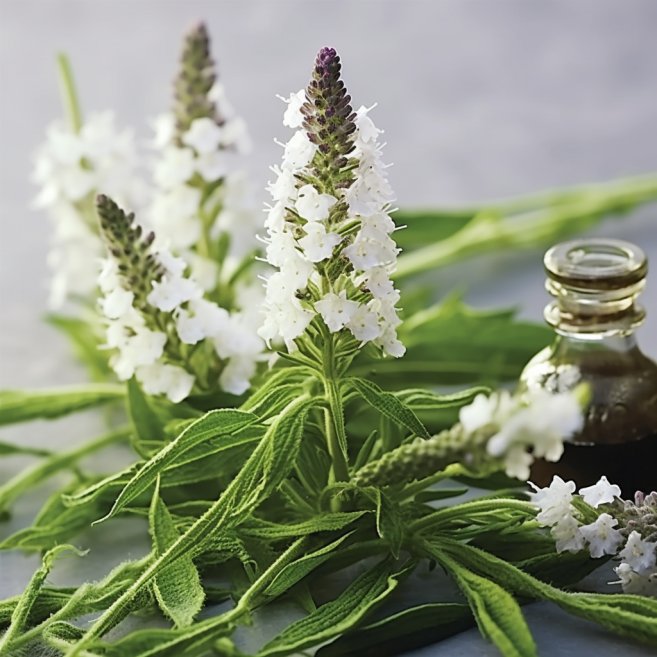
A small-batch Lippia alba essential oil steam distilled in the United States from leaves and flower buds. Its fresh middle-note profile combines fruity, floral and citrus nuances with a dry aromatic edge.
At a Glance
- Botanical name: Lippia alba
- Extraction: Steam distilled
- Plant parts: Leaves and flower buds
- Aromatic profile: Fruity, fresh floral, citrus-like and aromatic
- Perfumery note: Middle
Specifications of White Verbena Essential Oil
- Botanical name: Lippia alba (Mill.) N.E.Br. ex Britton & P.Wilson
- Family: Verbenaceae
- Common names: White verbena, bushy lippia, bushy matgrass, pitona
- INCI: Lippia Alba (White Verbena) Leaves and Stems Oil
- Parts used: Leaves and flower buds
- Note: Middle
- Odor: Very aromatic, fruity, fresh floral, citrus-like and astringent
- Appearance: Yellow
- Native range: Tropical and subtropical America, including Texas and Florida
Aromatic Profile
A lively fruity-herbal heart with fresh floral lift, citrus brightness and a dry astringent edge.
Blending Direction
- Pairs with bergamot and other citrus oils, citronella, lemongrass, litsea, petitgrain and neroli.
- Builds herbal structures with lavender, lavandin, clary sage, rosemary, juniper and carrot seed.
- Softens with geranium, palmarosa, rose, linden blossom, vanilla, violet leaf and ylang ylang.
Composition & Formulation
Characteristic constituents of this Lippia alba essential oil include carvone, piperitone, tagetenone and citral.
Technical Details
- INCI: Lippia Alba (White Verbena) Leaves and Stems Oil
- Extraction: Steam distillation
- Plant parts: Leaves and flower buds
- Appearance: Yellow
Formulation Notes
- Use in diluted aromatic formulations
- Add gradually to fresh citrus, floral and herbal blends
- Store tightly closed and protected from heat, light and air
Applications
Natural Perfumery
- Perfume oils and fragrance compositions that feature this material’s distinctive aromatic profile
- Use as a middle note in perfume oils and solid fragrances
- Blends with Angelica, Bergamot and other Citrus oils, Carrot Seed, Citronella, Clary Sage, Geranium
Safety
- For external use only; do not ingest or apply undiluted.
- Citral-rich batches may require stronger sensitization and allergen controls.
- Patch test the finished formulation and avoid eyes, mucosa and damaged skin.
- Avoid use during pregnancy, with infants, elderly users or epilepsy; seek qualified individual guidance.
- Keep tightly closed and protected from heat, light and oxygen.
Professional purchasing
Need a larger quantity, documentation or sourcing support?
Share
