Skip to product information
1 of 1

Botanica Gaia

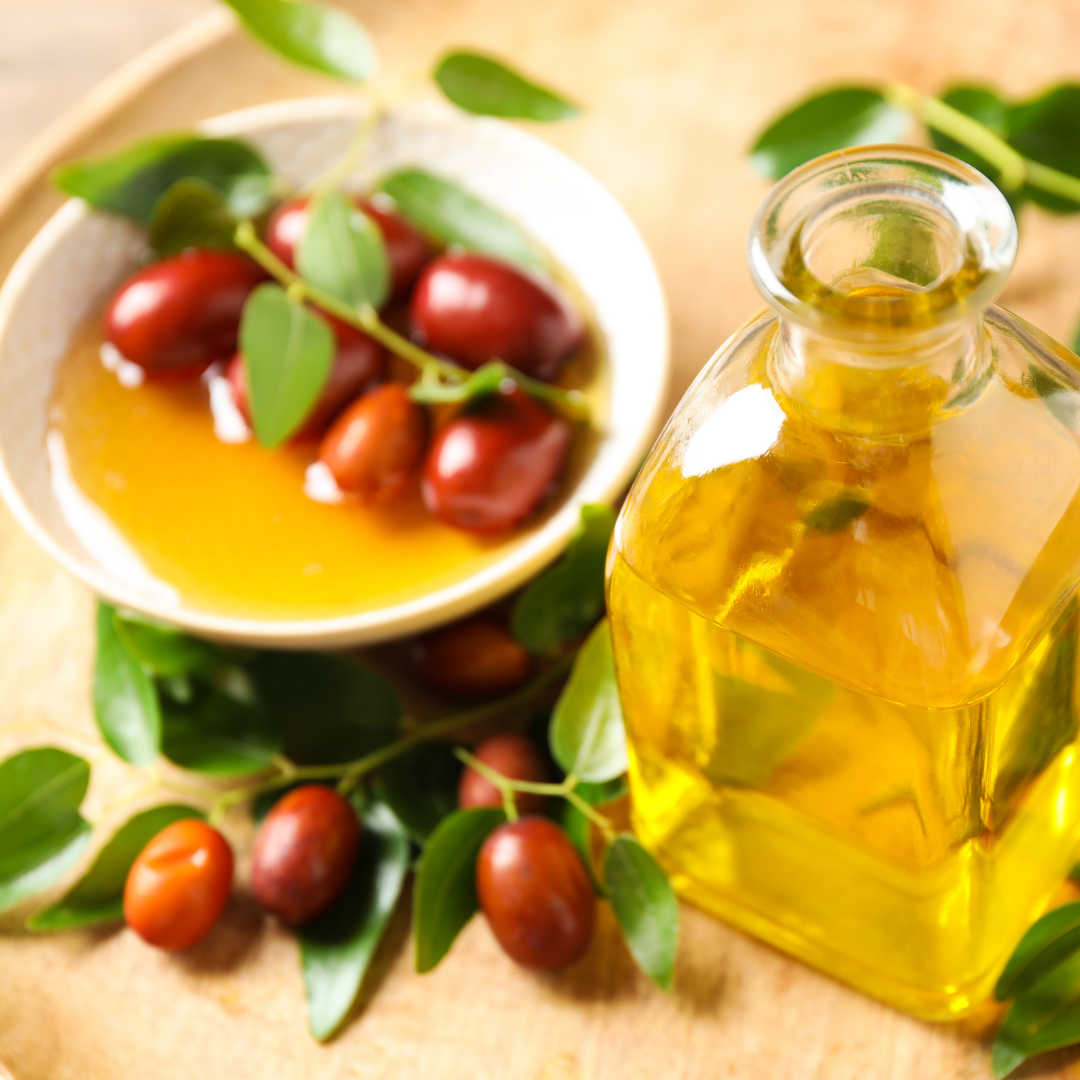
Bio Golden Jojoba Seed Oil (Simmondsia chinensis)

Bio Golden Jojoba Seed Oil (Simmondsia chinensis)

Jojoba seed oil for diluting essential oils, absolutes, and CO₂ extracts.

Regular price $19.99 USD
Regular price Sale price $19.99 USD
Sale Sold out
Taxes included. Shipping calculated at checkout.
Size
Quantity

Jojoba Oil (Simmondsia chinensis seed oil) is a unique, multifunctional carrier widely used in cosmetic formulation, aromatherapy, and natural perfumery. Although commonly referred to as an oil, jojoba is technically a liquid wax ester, making it structurally closer to human sebum than conventional vegetable oils. Jojoba oil is a gold-standard carrier oil valued for its stability, skin affinity, and versatility. Its ability to safely and effectively carry essential oils and CO₂ extracts—without altering their aromatic or functional profiles—makes jojoba an indispensable ingredient in professional cosmetic and aromatherapy formulation.

Properties of Jojoba Seed Oil

- Non-comedogenic (comedogenic index: 0). 

- Highly stable against oxidation. 

- Excellent skin compatibility. 

- Lightweight, non-greasy skin feel. 

- Odor-neutral, ideal for aromatics. 

- Long shelf life (typically 5 years). 

- Unlike triglyceride-based oils, jojoba does not readily oxidize or go rancid, which contributes to its exceptional stability in finished formulations.

Specifications of Bio Golden Jojoba Seed Oil

  • Botanical Name: Simmondsia chinensis
  • Family Name: Simmondsiaceae.
  • Common Name: Jojoba, Golden Jojoba, Goatnut, Deer-nut, Coffee Bush.
  • INCI: Simmondsia Chinensis seed Oil.
  • Parts Used: Seeds
  • Extraction Method: Cold Pressed.
  • Odor: Neutral scent.
  • Appearance: Golden.
  • Country of Origin: United States
  • Comedogenic Index: 0

- Comedogenic level 0: it is non-comedogenic and does not cause pore clogging.

- Comedogenic level 1: there is a small (very low) possibility that the ingredient is comedogenic and may clog pores.

- Comedogenic level 2: in most cases, it will not clog pores. The possibility that it may clog pores is moderate to low.

- Comedogenic level 3: they have a medium chance of clogging pores, depending especially on the skin type.

- Comedogenic level 4: the chance of clogging pores, regardless of the skin type, is quite high.

- Comedogenic level 5: they tend, in almost all cases, to clog skin pores. In fact, very few people tolerate the oils found here.

Main constituents of fatty acids:

  1. Wax Esters: 98%. 
  2. Eicosenoid Acid: 65%. 


Aromatic Profile

Neutral scent.

Chemistry

Although commonly called an oil, jojoba is technically a liquid wax ester, which is why it feels lightweight and skin‑affine.

Cold pressing preserves the oil’s naturally stable profile, helping it resist oxidation.

Applications

Skin Benefits

  • Supports the skin barrier function.
  • Helps reduce trans-epidermal water loss (TEWL).
  • Balances oil production in oily and acne-prone skin.
  • Soothes sensitive or reactive skin.
  • Improves skin softness and elasticity.
  • Because of its biomimetic nature, jojoba oil is well tolerated by nearly.

Use as a Carrier for Essential Oils

Jojoba oil is one of the most preferred carriers for essential oils due to:

Its neutral aroma, which does not interfere with volatile profiles. High chemical stability, protecting essential oils from oxidation. 

- Excellent skin spreadability and absorption

- Reduced risk of irritation compared to heavier carrier oils

It is commonly used to dilute essential oils for:

  • Facial oils.
  • Roll-ons.
  • Massage oils.
  • Aromatherapy blends.
  • Leave-on cosmetic products.

Advantages with CO₂ Extracts

  • Solubilizes resinous and waxy fractions efficiently. 
  • Maintains chemical integrity of sensitive actives.
  • Improves pourability and dosing accuracy.
  • Enhances formulation stability.
  • Extends shelf life of CO₂-based ingredients.

This makes jojoba oil an excellent choice for:

  • Pre-diluted CO₂ extracts.
  • Botanical concentrates.
  • Perfumer’s accords.
  • Active-infused facial oils.
  • Balm and ointment bases.
  • Typical Applications.
  • Facial and body oils
  • Serums and balms.
  • Aromatherapy roll-ons.
  • Natural perfumes.
  • For oil and solid perfumes. 

Safety

  • For external use only.
  • Use appropriate dilution before skin application.
  • Avoid contact with eyes and mucous membranes.
  • Keep out of reach of children.
  • Store cool and dark to minimize oxidation.
View full details

The information presented here is for educating our customers about the traditional uses of essential oils and is not intended to diagnose, treat, cure, or prevent any disease. You are responsible for understanding the safe application of these products.