Botanica Gaia
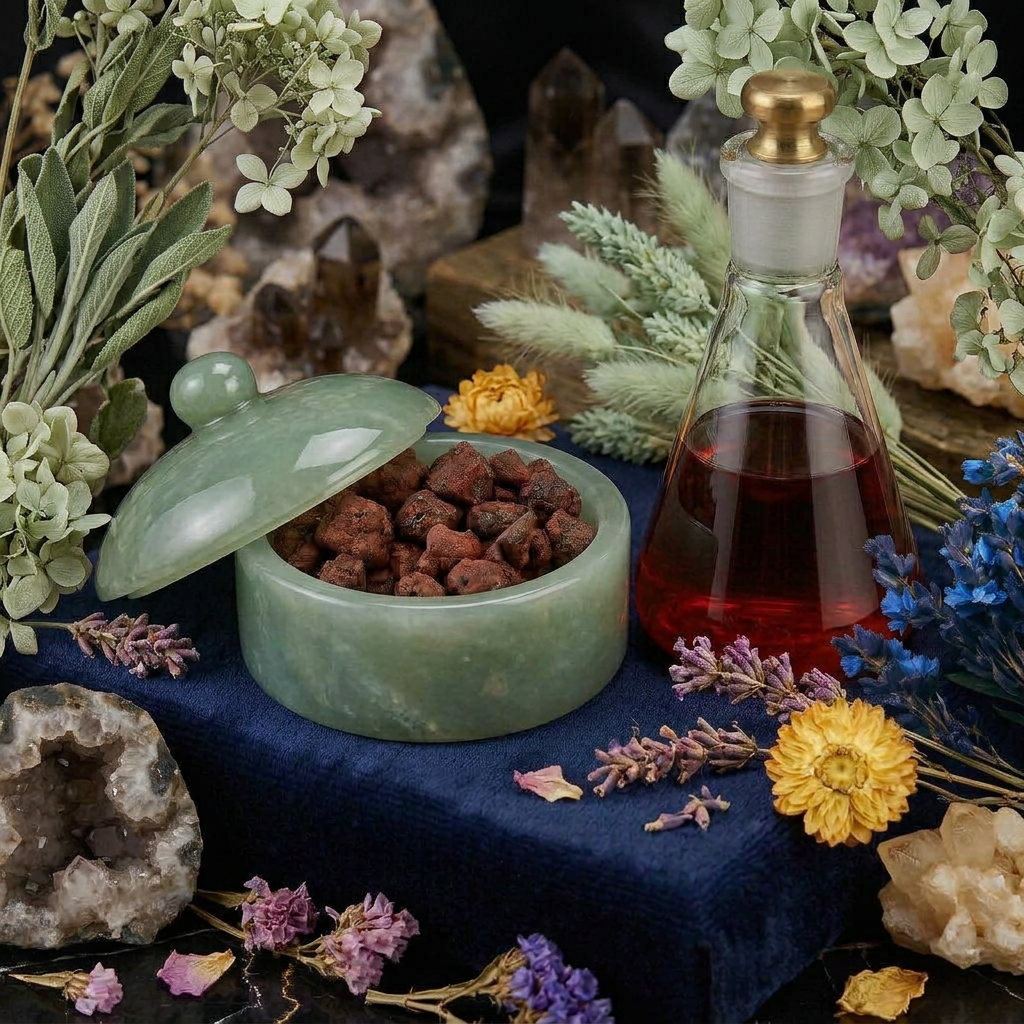
Bio Kalahary Melon Seed Oil Ultrasonically Infused with Dalzielii and Dragon's Blood Resin
Silky Kalahari melon seed oil infused with Dalzielii frankincense and deep red Dragon’s Blood resin.
Couldn't load pickup availability
Bio Kalahari Melon Seed Oil Ultrasonically Infused with Dalzielii and Dragon’s Blood Resin is a distinctive botanical oil crafted with organic Kalahari melon seed oil and carefully infused with Boswellia dalzielii frankincense resin and precious Dragon’s Blood resin using ultrasonic infusion technology.
This refined process helps disperse the naturally oil-compatible resinous constituents into the lightweight carrier oil, creating a silky botanical preparation with a warm, dry, balsamic, earthy, and deeply resinous character.
Organic Kalahari melon seed oil is valued in cosmetic formulation for its elegant, fast-absorbing texture and naturally occurring fatty acids, particularly linoleic acid. Its lightweight skin feel makes it ideal for facial oils, body oils, massage blends, balms, hair oils, ritual anointing oils, and premium anhydrous skincare.
Boswellia dalzielii contributes a warm, dry, woody, subtly citrus-like, and balsamic frankincense profile. Dragon’s Blood resin contributes a deep red botanical identity and a traditional association with ritual, protection, sacred preparations, pigments, and ceremonial use.
Dragon’s Blood resin is not primarily valued for a strong natural aroma and does not contain an essential oil in the same way as aromatic resins such as frankincense. Therefore, the finished infusion may have only a subtle resinous scent, with the Dalzielii frankincense providing most of the aromatic character.
Together, these materials create a rare dual-resin botanical oil suitable for luxury skincare, ritual beauty preparations, natural perfumery-inspired oils, anointing blends, balms, and symbolic botanical formulations.
Specifications
- Accepted botanical materials: Citrullus amarus, Boswellia dalzielii and Dracaena cinnabari
- Supplied Kalahari melon synonym: Citrullus lanatus var. citroides
- Botanical families: Cucurbitaceae, Burseraceae and Asparagaceae
- Parts used: Seeds and two resins; the previous reference to flowers has been corrected
- Extraction/processing: Ultrasonic maceration
- Appearance: Liquid
- Country of manufacture: United States; raw-material origins are not established by this statement
- Aromatic character: Warm resin, dry balsamic woods, earth, subtle smoke and soft citrus
- Sourcing note: Dracaena cinnabari is native to Socotra; confirm species identity, provenance, legality and responsible sourcing
- Usage discrepancy: Broad formulation levels are supplied elsewhere, but the current safety field limits leave-on skincare to 2%; use the conservative 2% ceiling pending clarification
- Documentation: Confirm ingredient naming, blend ratios, provenance and batch specifications against the current COA and SDS
Aromatic Profile
A deep dual-resin profile in which Dalzielii frankincense provides most of the aromatic character.
- Dominant notes: Resinous, balsamic and woody
- Supporting notes: Earthy, dry, softly smoky and citrus-like
- Intensity: Moderate and naturally batch-variable
- Overall impression: Deep, contemplative and subtly coloured
Formulation & Chemistry
The supplied information does not state the ratio of carrier oil, frankincense resin and the third botanical, nor provide a batch-specific fatty-acid or infused-constituent profile.
Ultrasonic maceration transfers a variable fraction of oil-compatible material. The finished product must not be treated as the neat resin, an essential oil or an absolute.
Dragon’s Blood resin is not equivalent to a Dragon’s Blood essential oil. Its colour, extractable fraction and contribution to the finished infusion require batch-specific documentation.
Formulation Guidance
- For leave-on skincare, do not exceed 2% under the current safety field until the conflicting use levels are clarified.
- Introduce through a compatible oil phase and avoid unnecessary prolonged heat.
- Evaluate colour, clarity, sediment, odour, oxidation and packaging compatibility.
- Use current batch documentation rather than generic constituent data.
Applications
Skincare and Body Care
- Facial and body oils at the documented or safety-assessed concentration
- Balms, massage oils and compatible emulsion oil phases
- Oil cleansers and spa-inspired anhydrous products
Hair and Grooming
- Hair-end and conditioning oils
- Scalp and pre-shampoo products
- Beard and grooming oils
Natural Perfumery and Ritual-Inspired Cosmetics
- Oil perfumes and aromatic balms
- Dry balsamic, earthy, woody and softly smoky resin accords
- Symbolic or ritual-inspired cosmetic products without therapeutic claims
Safety
Always patch test the finished formulation before topical use.
- For external use only; do not ingest.
- For leave-on skincare, do not exceed 2% under the current safety field until the conflicting formulation guidance is resolved.
- Avoid eyes, mucous membranes and broken skin.
- Confirm the identity, provenance, trade documentation and responsible sourcing of the Dracaena cinnabari resin.
- Dragon’s Blood may colour the finished product; assess staining and packaging compatibility.
- Do not burn, heat or diffuse this carrier-oil infusion.
- Pregnant or breastfeeding users, young children and highly sensitive users should seek qualified guidance.
- Protect from heat, air and direct light and review the current COA and SDS before commercial use.
Share

The information presented here is for educating our customers about the traditional uses of essential oils and is not intended to diagnose, treat, cure, or prevent any disease. You are responsible for understanding the safe application of these products.