Botanica Gaia
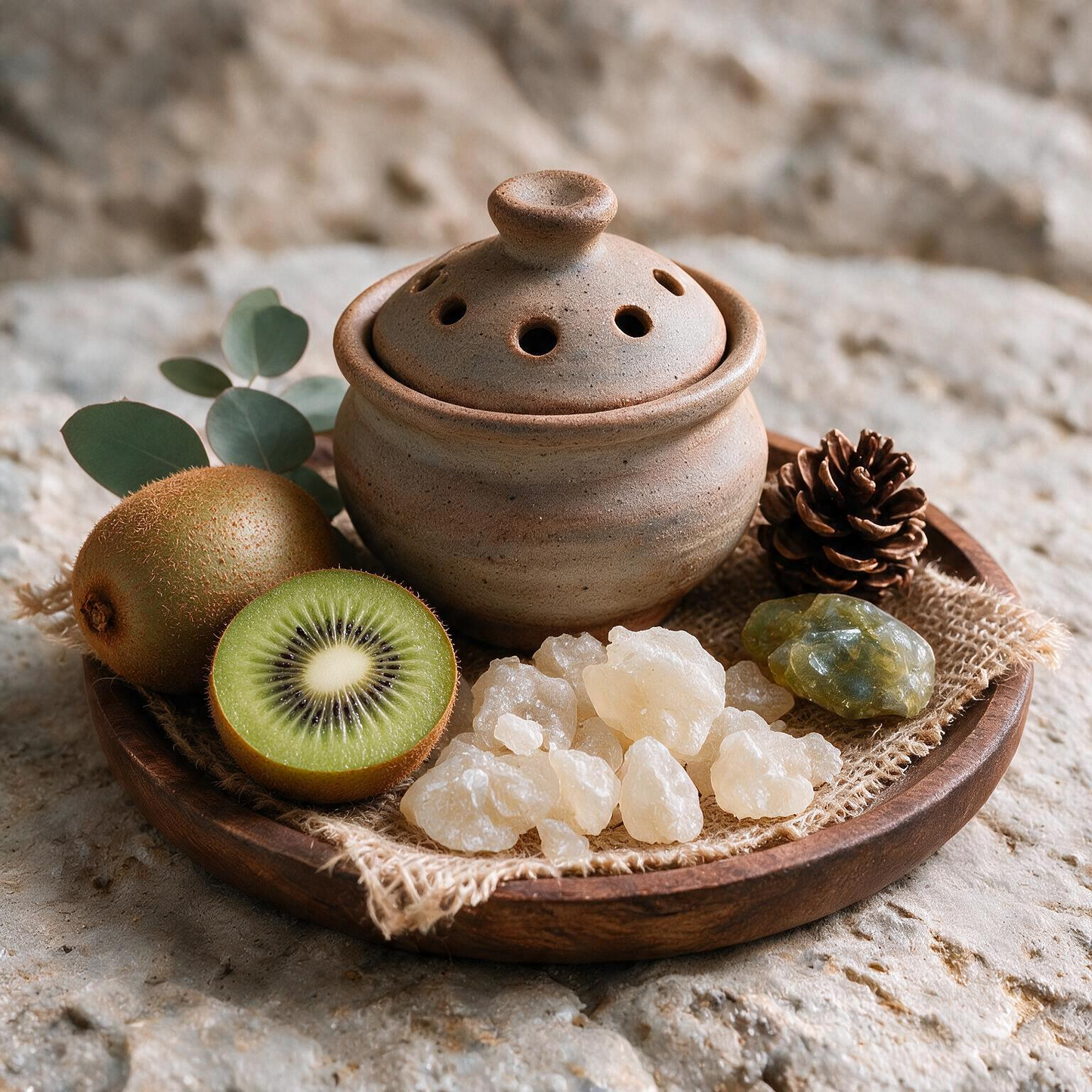
Bio Kiwi Seed Oil + White Copal | For Skincare and Haircare
A refined botanical elixir for radiant skin and lustrous hair.
Couldn't load pickup availability
Bio Kiwi Seed Oil + White Copal is a premium botanical blend combining the fine, lightweight texture of kiwi seed oil with the warm, woody and balsamic aroma of white copal resin.
Kiwi seed oil is valued in cosmetic formulation for its naturally occurring unsaturated fatty-acid profile and elegant skin feel. It is typically rich in alpha-linolenic acid and linoleic acid, making it especially suitable for products intended to condition dry, mature-looking, delicate or environmentally stressed skin.
In haircare formulations, kiwi seed oil can help improve softness, shine and manageability while reducing the appearance of dry or rough ends.
White copal adds a distinctive aromatic character with resinous, woody, balsamic and gently incense-like nuances. The finished blend is suitable for luxury facial oils, body serums, hair treatments, beard oils, cleansing oils, balms and botanical perfume products.
Specifications of Kiwi Seed Oil + White Copal Resin
- Botanical Name: Actinidia chinensis + Boswellia Bipinnata.
- Family Name: Burseraceae + Actinidiaceae.
- Common Name: Sweet almond, White Copal.
- INCI: Actinidia Chinensis {Kiwi} Seed Oil, Boswellia Bipinnata Resin Extract.
- Part Used: Seeds and Resin.
- Extraction Method: Ultrasonically Infused.
- Scent: Kiwi seed oil usually has a mild botanical aroma. Most of the distinctive aromatic profile comes from the white copal., warm resinous, balsamic, lightly incense-like, creamy, smooth, sacred, subtly sweet, and softly woody.
- Appearance: Liquid.
- Country of Origin: United States.
- Recommended Usage Levels: 1% – 100%, depending on formulation type and concentration.
Important Aroma Note
Bio Kiwi Seed Oil + White Copal is a naturally aromatic botanical material rather than a synthetic fragrance oil.
Its aroma may be:
- Softer than a conventional perfume oil
- More complex
- Less uniform between botanical batches
- Affected by heat
- Affected by oxidation
- Modified by other ingredients
- Changed during soapmaking or alkaline processing
Always evaluate the aroma in the completed formulation.
Suggested Usage Level
1–100% depending on the formulation.
For facial oils: 1–20%
For body oils: 5–100%
For hair oils: 2–50%
For scalp oils: 2–30%
For balms and solid perfumes: 5–40%
For massage and ritual oils: 10–100%
Best For
- Dry-feeling skin
- Rough-feeling skin
- Mature-looking skin
- Dull-looking skin
- Delicate skincare formulations
- Dry hair
- Curly or textured hair
- Coarse hair
- Frizz-prone hair
- Dry ends
- Dry beards
- Luxury facial oils
- Botanical skincare collections
- Natural perfumery
- Resin-inspired grooming products
Suitability for highly sensitive or acne-prone skin should be evaluated in the finished product.
Anhydrous Products
The blend can be incorporated directly into:
- Facial oils
- Body oils
- Beard oils
- Hair oils
- Balms
- Butters
- Lipid serums
- Solid perfumes
- Cleansing oils
Mix thoroughly until uniform.
Emulsions
For creams, lotions and conditioners:
- Add to the oil phase before emulsification, or
- Add during cool-down when the formula permits.
- Confirm that the emulsifier supports the total oil-phase percentage.
- Monitor viscosity, separation and long-term stability.
Traditional and Spiritual Uses
Copal resins have historically been used in aromatic, ceremonial and cultural traditions in several regions.
Traditional associations may include:
- Purification
- Meditation
- Prayer
- Ceremonial incense
- Grounding
- Spiritual protection
- Sacred spaces
- Aromatic rituals
This information is provided for historical and cultural reference only and is not intended as a medical or therapeutic claim.
Safety
Always patch test before topical use.
- For external use only.
- Use Amber, Cobalt or Miron violet glass bottles to protect from light degradation.
- Avoid ingestion unless under expert supervision.
- Pregnancy, young children, or sensitive skin users should consult a qualified practitioner.
Allergen Information
The allergen status depends on:
- Kiwi species
- Processing method
- Refining status
- White copal botanical source
- Copal extraction method
- Added aromatic ingredients
- Naturally occurring fragrance allergens
Kiwi is a known food allergen for some individuals. A kiwi seed-derived cosmetic ingredient should not automatically be described as allergen-free without supporting documentation.
Obtain a batch-specific allergen declaration before making allergy-related claims.
Share

The information presented here is for educating our customers about the traditional uses of essential oils and is not intended to diagnose, treat, cure, or prevent any disease. You are responsible for understanding the safe application of these products.