

Botanica Gaia
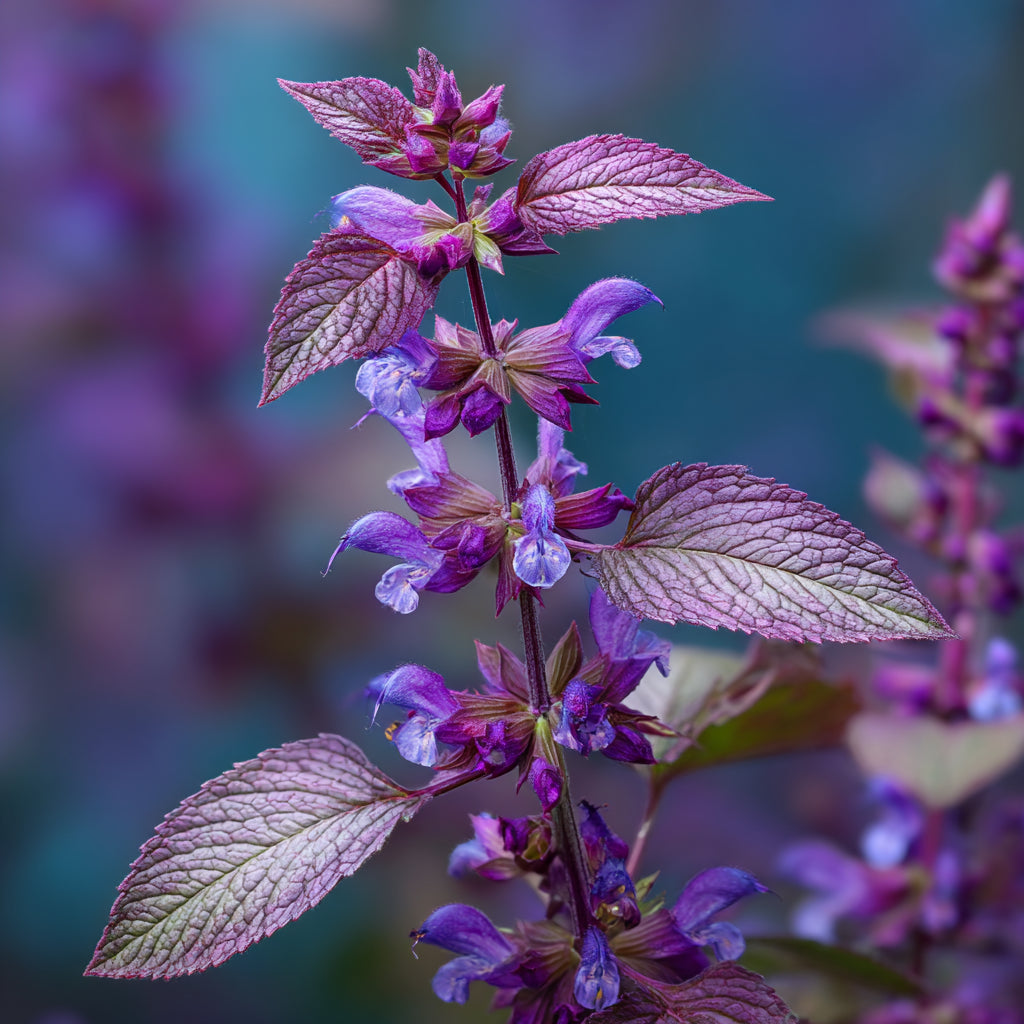
Clary Sage Wax (Salvia Sclarea)
Clary Sage Wax (Salvia Sclarea)
Herbaceous, musky and softly floral Salvia sclarea CO₂ wax for perfumery and solid formulations
Couldn't load pickup availability
Clary Sage CO₂ Wax
It combines a warm herbaceous, musky and softly floral aroma with a natural wax structure suited to anhydrous products.
At a Glance
- Botanical name: Salvia sclarea
- Family: Lamiaceae
- Extraction: Supercritical CO₂ wax fraction
- Form: Solid or semi-solid wax
- Origin: Bulgaria
- Perfumery role: Base note and fixative
Specifications
- Botanical name: Salvia sclarea
- Family: Lamiaceae
- Common name: Clary Sage
- Plant parts: Flowering tops
- Extraction method: Supercritical CO₂, wax fraction
- Odor: Warm, herbaceous, musky and slightly floral, with amber, tea, hay and balsamic facets
- Country of origin: Bulgaria
- Melting point: 60–70 °C (140–158 °F)
- Solubility: Oil, alcohol and butter compatible; insoluble in water
Aromatic Profile
Warm, herbaceous and musky with soft florals, hay and green-tea facets.
Perfumery Character
- Note: Base
- Function: Fixative and bridge between fresh top notes and warm bases
- Pairings: Lavender, bergamot, cedarwood, frankincense, vetiver, patchouli, oakmoss and rose
Formulation & Usage
The material contains volatile aroma compounds together with a non-volatile wax fraction.
- Melting point: 60–70 °C
- Processing: Melt gently with indirect heat; avoid direct flame
- Water systems: Require an appropriate emulsification or dispersion system
Applications
Suggested Uses
- Solid perfumes and oil-based fragrance formats.
- Herbal, ambery, musky, fougère and woody accords.
- Massage candles and aromatic wax products.
Safety
- For external use only; avoid ingestion.
- Patch test the finished cosmetic formula.
- Use indirect heat and avoid direct flame.
- Store cool, dark and tightly closed to limit oxidation.
Professional purchasing
Need a larger quantity, documentation or sourcing support?
Share
The information presented here is for educating our customers about the traditional uses of essential oils and is not intended to diagnose, treat, cure, or prevent any disease. You are responsible for understanding the safe application of these products.