


Botanica Gaia
Spiked Ginger Lily Essential Oil | Hedychium Spicatum
Spiked Ginger Lily Essential Oil | Hedychium Spicatum
Steam-distilled Hedychium spicatum root or rhizome oil with floral earth, sweet wood, spice and camphoraceous depth.
Couldn't load pickup availability
Spiked Ginger Lily Essential Oil
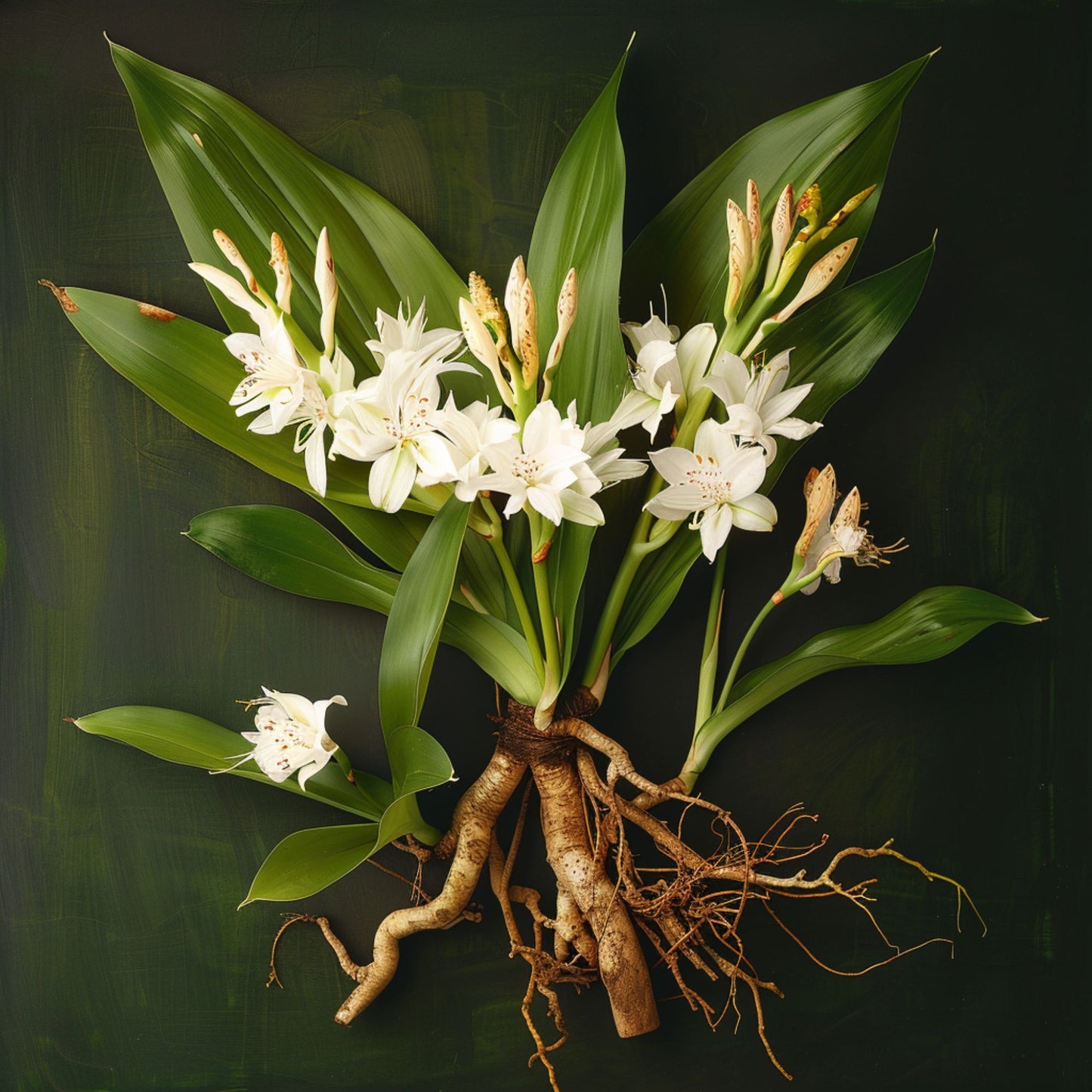
Steam distilled from the underground plant material ofHedychium spicatum, this amber oil has a floral-earthy, sweet-woody and spicy aroma with a camphoraceous middle note.
At a Glance
- Aromatic profile: Floral-earthy, sweet woody, spicy and camphoraceous-cineolic
- Note: Middle
Specifications of Spiked Ginger Lily Essential Oil
- Botanical name: Hedychium spicatum
- Family: Zingiberaceae
- Common name: Spiked ginger lily and kapoor kachari
- INCI: Hedychium Spicatum Root Oil
- Extraction method: Steam distilled
- Part used: roots
- Note: Middle
- Odor: Floral-earthy, camphoraceous, spicy, sweet-earthy and woody
- Appearance: Amber
- Native range: Himalaya to south-central China and Indo-China; US origin refers to cultivation, distillation or supply
Aromatic Profile
A textured aromatic heart where floral earth and sweet wood meet ginger-like spice, cool camphoraceous lift and a subtle cineolic edge.
Blending Direction
- Pairs with bergamot and other citrus, black pepper, clove and aromatic herbs.
- Supports geranium, palmarosa, rose, ylang ylang and neroli.
- Deepens cypress, juniper, oakmoss, vetiver and woody-incense structures.
Formulation & Usage
Reported dominant profiles include 1,8-cineole, 10-epi-γ-eudesmol, terpinen-4-ol, sabinene, α-cadinol and elemol.
Formulation
- Use for complex floral-spicy and woody aromatic hearts.
Aromatherapy Applications
It may be incorporated into:
- Diffuser blends.
- Massage oils.
- Spa formulations.
- Botanical body oils.
- Meditation blends.
- Warm seasonal aromatic compositions.
- Herbal and forest-inspired blends.
Its spicy, fresh and woody profile is especially suitable for grounding and invigorating aromatic compositions.
Hair & Scalp Care
Kapur Kachri has a long history of traditional use in hair preparations and may be incorporated into appropriately formulated:
- Hair oils.
- Scalp oils.
- Shampoos.
- Conditioners.
- Beard oils.
- Hair serums.
- Botanical grooming products
For cosmetic marketing, it is best to describe its role in terms of conditioning, fragrance and traditional botanical use rather than making drug-style hair-growth claims.
Skin & Body Care
At appropriate dilution levels, it may also be used in:
- Body oils.
- Balms.
- Soaps.
- Massage formulations.
- Men's grooming products.
- Perfumed lotions.
- Solid perfumes
Suggested Usage
Fine Fragrance: 0.1–5%
Hair & Scalp Formulations: 0.1–1%
Skin & Body Care: 0.05–1%
Aromatic Blends: 0.1–3%
Applications
Perfumery
- For floral-earthy hearts, spicy woods, aromatic florals and unusual ginger-lily signatures.
Incense & Attar
- For sweet woody, earthy and camphoraceous depth in suitable incense and oil-perfume concepts.
Aromatic Products
- For distinctive botanical fragrance.
Safety
- For external use only; do not ingest or apply undiluted.
- Avoid eyes, mucosa and damaged skin.
Professional purchasing
Need a larger quantity, documentation or sourcing support?
Share
The information presented here is for educating our customers about the traditional uses of essential oils and is not intended to diagnose, treat, cure, or prevent any disease. You are responsible for understanding the safe application of these products.